


Governance
Our Framework of Integrity, Governance and Risk Management (FIGR)

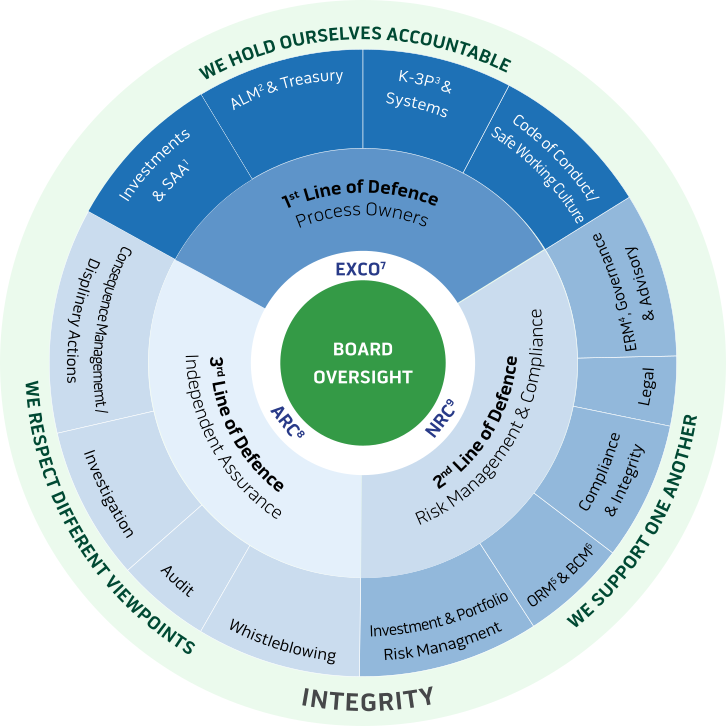
Adopted in 2004, our Framework of Integrity, Governance, and Risk Management (FIGR) guides us in managing risks effectively and instilling a strong culture of corporate governance and risk management in the organisation. The FIGR highlights the Board’s oversight functions and outlines the key parameters that guide our overall strategy execution.
Our Board Charter sets out the roles and responsibilities of the Board. Supporting this, the FIGR includes a Schedule of Matters for the Board, Limits of Authority for Management, a Risk Management Policy and other pertinent policies and guidelines.
As part of our accountability practices, we comply with statutory public disclosure requirements with respect to our investments, divestments, and capital-raising activities. In addition, we make the appropriate disclosures of our performance and operations to meet legal and regulatory requirements, and on a voluntary basis to our key stakeholders.
Our accounts are audited by an independent external auditor and the audited financial statements are submitted to the Companies Commission of Malaysia. Financial data is disclosed to our shareholder, the Minister of Finance, Inc. We also publish our audited financial statements on our website and through annual publications including The Khazanah Report.
1SAA – Strategic Asset Allocation
2ALM – Asset and Liability Management
3K-3P – Khazanah Policies, Processes & Procedures
4ERM – Enterprise Risk Management
5ORM – Operational Risk Management
6BCM – Business Continuity Management
7Executive Committee
8Audit & Risk Committee
9Nomination and Remuneration Committee
Khazanah ESG FIGR
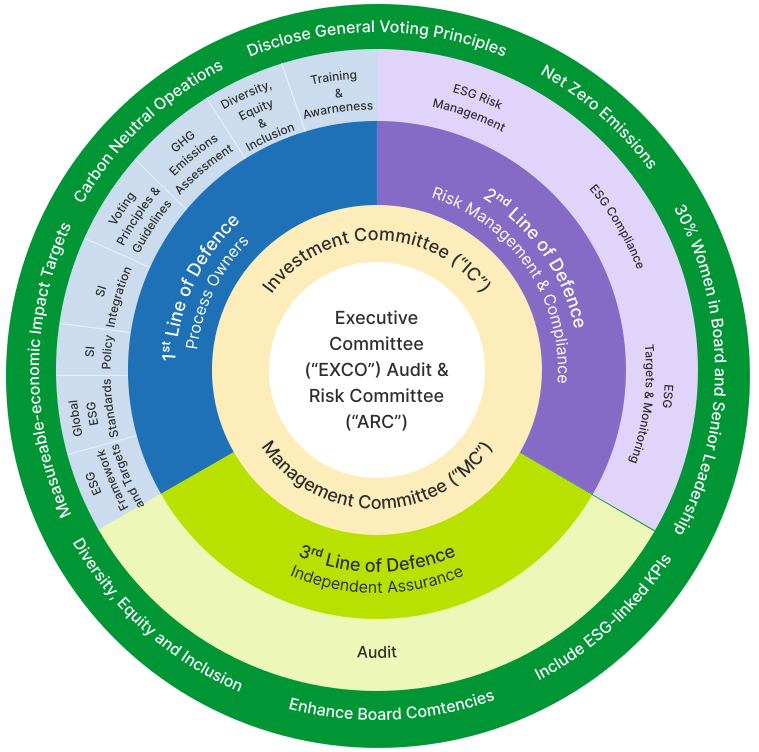
Our ESG FIGR is adopted to guide and govern our dual ESG objectives of Enterprise Sustainability (ES) and Sustainable Investments (SI).
Following the launch of our Sustainability Framework and medium-term targets in June 2022, the Environmental, Social and Governance FIGR (ESG FIGR) was developed to guide us in achieving our ESG targets. The framework was adopted by the Management Committee in May 2023 and highlights the management’s oversight on ESG matters including internal ESG policies and stewardship priorities, based on our ESG targets.
The Board has the ultimate responsibility and oversight for all sustainability matters, with the EXCO and ARC as the sub-committees that support the Board with key oversight over ESG initiatives. Further to this, the Management Committee and Investments Committee serve as the key platforms for deliberation and monitoring of our progress, while also functioning as a management-level approving authority.
The ESG FIGR ensures robust ESG risk management and compliance for both Sustainable Investing and Enterprise Sustainability. In 2022, we also developed the Shareholder Expectations and Investment Stewardship (SEIS) document, which clearly outlines our expectations towards our investee companies and our investment stewardship principles. It also includes our newly revised Voting Guidelines, which govern our voting at general meetings of listed companies.
As part of our efforts to maintain a high standard of transparency and accountability, we published the SEIS document and Sustainable Investment Policy, outlining our principles and commitments in relation to responsible investment and taking into account ESG factors. These guidelines complement our Investment Policy, which outlines our investment mandate, objectives and principles.
Commitment to Institutional Good Governance
Khazanah is a member of the IIC and a signatory of the Malaysian Code for Institutional Investors 2022 (MCII 2022), whereby we support and comply with the code.
We are largely in line with its seven principles, and the Stewardship Spotlight as outlined in our Shareholder Expectations and Investment Stewardship (SEIS) document
Click here for our full Statement of Compliance.
Khazanah Fraud Policy Statement

Ethical Standards & Public Trust
Khazanah affirms its determination to uphold the highest ethical standards and support the Malaysian Government’s integrity initiatives. Through this commitment, we protect our reputation, preserve public trust, and ensure that the nation’s resources are managed responsibly for the benefit of all Malaysians.
Openness & Protection for Whistleblowers
We promote a culture of openness and transparency by providing secure and confidential channels for employees and stakeholders to report concerns. We aim to protect staff from retaliation and seek fair and timely resolution of matters reported to us.
Legal & Regulatory Compliance
We comply with all applicable laws and regulations, including the Malaysian Anti-Corruption Commission Act, the Companies Act, and international regulations and standards. Khazanah continuously strengthens its framework through fraud risk assessments, preventive and detective controls, investigation protocols, and ongoing monitoring.
Asset Protection & National Responsibility
Khazanah is committed to protecting our assets and delivering sustainable value for the nation. As Malaysia’s Sovereign Wealth Fund, we uphold integrity, accountability, and transparency—recognizing that effective fraud risk management is fundamental to preserving public trust and fulfilling our dual mandate.
Zero-Tolerance Policy
We uphold a zero-tolerance stance on fraud, bribery and corruption. This commitment applies to all staff and subsidiaries, and our firm stance shall be promoted and communicated to joint ventures, fund partners, portfolio companies, and all external parties with whom we engage.
Proactive Prevention & First Line of Defence
We act proactively to prevent, detect, and respond to fraud. All staff are expected to uphold the highest standards of integrity and ethical conduct, serving as the first line of defense. Our governance, policies, and controls reinforce vigilance, strengthen accountability, and embed ethical behavior across the organisation.
Khazanah’s Publication on Integrity and Anti-Corruption
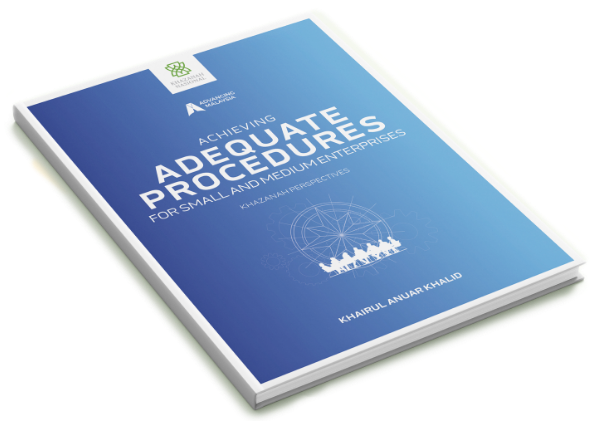
Introducing “Achieving Adequate Procedures for Small and Medium Enterprises: Khazanah Perspectives.”
This publication focuses on the impact of Section 17A of the MACC Act on companies, especially Small and Medium Enterprises (SMEs), who wish to implement “Adequate Procedures” to mitigate potential criminal liabilities.
From Khazanah’s practical insights, this book offers actionable strategies for SMEs to tailor their compliance frameworks effectively.
Click the button below to download the PDF